Clinical dispensing: models, automated cabinets and access control
Dispensing is where inventory turns into care. It is also where recording errors, avoidable waits and much of the waste concentrate. This guide compares the available models and explains when automation pays off.
What clinical dispensing is and why it becomes a bottleneck
Dispensing means delivering the right supply or medication, to the right person, at the moment it is needed, leaving evidence that it happened. All four conditions matter equally, and the last one is the first to be sacrificed.
The bottleneck appears because the first three conditions are urgent and the fourth does not look urgent. When the clinical team needs something, they find it, take it and move on. The record is left for later, and later is when nobody remembers the lot.
Almost every clinical inventory problem blamed on the warehouse is in fact a dispensing problem. The warehouse knows what it shipped, not what was consumed.
The four dispensing models
No hospital runs a single model. The right question is not which one to adopt but which one belongs to each service.
- Ward stock: the unit keeps its own stock and serves itself freely. Fastest, and the one that leaves the least traceability
- Unit dose: pharmacy prepares medication per patient and per schedule. Safest, and the heaviest load on pharmacy
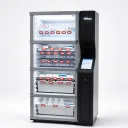
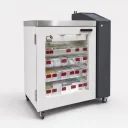
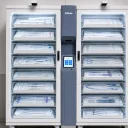
- Automated decentralised dispensing: a cabinet at the point of use controls access and records every withdrawal. Combines availability with recording
- On demand dispensing: the item is requested case by case. Most controlled, least suited to emergencies
The usual combination is unit dose for inpatient wards, automated cabinets in the operating room, emergency and critical care units, and ward stock only for low value, high movement items.
What an automated dispensing cabinet does
An automated cabinet is not a cupboard with a lock. It is a control point that identifies who withdraws, identifies what is withdrawn and records the event without asking for anything in return.
When the cabinet also identifies by unit, through RFID or by reading the package code, the record includes lot and expiry. That detail is what separates access control from a traceability system.
- Restricts access to authorised staff and by profile
- Records what was withdrawn, who withdrew it and when
- Links consumption to the patient or the procedure where the workflow allows it
- Depletes stock in real time and triggers replenishment from consumption
- Flags lots approaching expiry before they lapse
Access control: fingerprint, PIN and NFC
The access method defines who ends up on the record, and therefore defines the quality of all downstream traceability. A cabinet opened with a shared PIN records withdrawals with no owner.
A fingerprint identifies the person and cannot be lent. An individual PIN works well where fingerprints are not viable, for instance with gloves or in areas where the reader gets contaminated. An NFC credential is the fastest and depends on nobody lending the card.
In practice a combination works best: fingerprint or PIN as the primary method, with NFC as an alternative for workflows where seconds matter.
Per person recording is what gives access control its value, because it shows who withdrew each unit. What is stored and for how long is set during initial configuration, following the facility's own policy.
What to measure to know it is working
- Share of withdrawals with a patient or procedure attached
- Average time between withdrawal and its appearance in the clinical system
- Stockouts at the point of use, measured as failed withdrawals rather than warehouse shortages
- Units expiring inside the cabinet
- Gap between system stock and physical count
How to choose the model per area
The practical criterion crosses two variables: how much the item costs and how much the wait costs.
Where the item is expensive and the wait is tolerable, control wins: on demand dispensing or unit dose. Where the item is expensive and the wait is not tolerable, as in the operating room or the cath lab, the automated cabinet is the only model that solves both. And where the item is cheap and high movement, strict control costs more than it saves.
Frequently asked questions
Is automated dispensing only for medication?
No. The same principle applies to clinical supplies, high cost devices and implants. In the operating room the most frequent use case is not pharmacological but device related, where value per unit and traceability requirements are higher.
Is RFID required to automate dispensing?
Not to control access, but yes to identify by unit without adding work. A cabinet can record a withdrawal through on screen selection, but that method depends on the person correctly declaring what they took. Automatic reading removes that dependency.
What happens during an emergency?
The system cannot be an obstacle. The correct design allows immediate withdrawal and completes the record afterwards, flagging the event for reconciliation. A cabinet that blocks access during an emergency stops being used within a week.
Does automated dispensing replace pharmacy?
No. It changes its role. Pharmacy stops spending hours preparing and shipping replenishments and moves to supervising consumption, validating prescriptions and handling the exceptions the system raises.
How does it integrate with prescribing?
Through an interface with the clinical system. When the prescription is available at the dispensing point, the cabinet can validate against it and link the withdrawal to the patient automatically, which is the scenario that prevents the most errors.
Keep reading
Hospital medication control: a practical guide
The four medication groups where risk concentrates, the specific problem of the crash cart, cold chain, expiry and what to record at every event.
RFID in hospitals: clinical traceability guide
What RFID is, how it differs from barcodes, which frequency each clinical application uses and how a traceability project is structured.